

If your website traffic has felt like it fell off a cliff lately, you’re not alone. Buyer behavior is moving from clicking links to consuming answers directly inside AI interfaces: Google AI Overviews, ChatGPT, Perplexity, Copilot, and whatever comes next. According to Search Engine Land’s analysis of Google AI Overviews, most queries show a 34.5% click-through rate decline when AI summaries take over the keyword. This is already operational at scale: GNW Consulting and Demand Metric’s 2026 State of GEO in B2B Marketing report, based on 225 B2B marketing and revenue leaders surveyed in Q1 2026, found that 92% of B2B organizations are already experimenting with or operationalizing GEO, and 78% of those actively investing report measurable return on investment (ROI). The Wall Street Journal reported in 2025 that publishers like Business Insider have experienced outsized traffic drops large enough to become organizational crises, not just marketing problems.
Here’s the uncomfortable truth: in 2026, you can have the #1 Search Engine Results Page (SERP) for a high-volume keyword and still lose traffic because the answer is served before someone ever reaches your site. So the question becomes: how do people buy in an AI-powered age, and how do you show up in the places where decisions are being shaped? The answer is much bigger than Search Engine Optimization (SEO). This is the new Generative Engine Optimization (GEO) world, and if you’re still ignoring it, you’re in trouble. Here’s how GNW is helping clients show up in Large Language Models (LLMs) ahead of their competitors.
In this post, we’ll cover:
- The problem: impressions steady, clicks down
- GEO vs SEO: same universe, different physics
- Step one: get your benchmarks right
- The Protect, Pivot, Promote framework
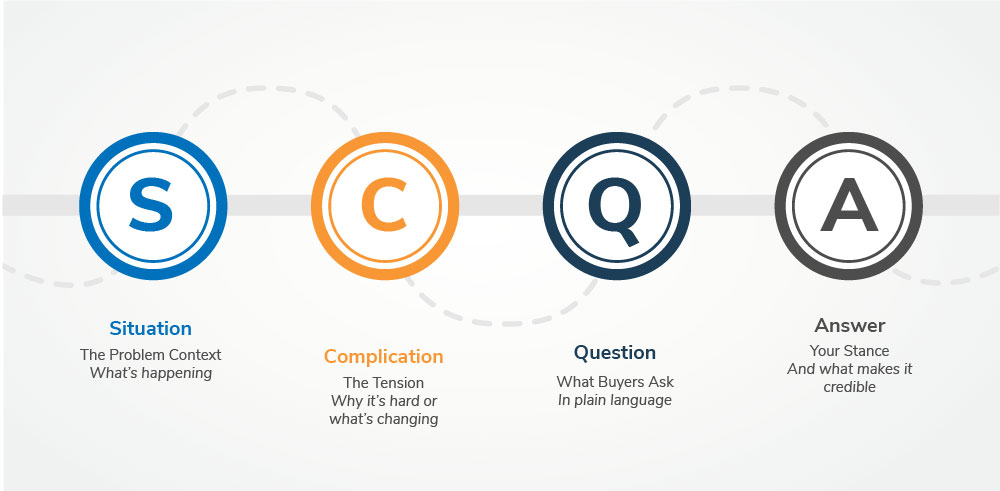
- The SCQA model
- Multi-channel discoverability
- Reverse engineer AI: test how models answer
- Own your audience
- What to do this week
- The mindset shift: SEO to GEO
- FAQs
This post recaps (and extends) the key ideas from two of our recent videos:
Key Takeaways
- AI Overviews are reducing click-through rates by roughly 34.5% on queries where they appear, per Search Engine Land’s 2025 analysis. A #1 SERP no longer guarantees traffic.
- GEO optimizes for AI-generated answers and citations, not clicks. Being cited can be “good enough” because brand recognition happens without a session on your site.
- GEO expands beyond your owned web properties to include YouTube, Reddit, LinkedIn, G2, analyst reports, and any platform an LLM might learn about you from.
- The Protect, Pivot, Promote framework gives you a way to prioritize which pages to defend, restructure, or amplify when you cannot optimize everything at once.
- The SCQA model (Situation, Complication, Question, Answer) in the first 200-300 words is the highest-leverage structural change for LLM citation, because models overweight the beginning and end of documents.
- Reverse engineering AI by prompting models like a buyer would is the fastest way to find content gaps, especially around pricing, geography, and competitor comparisons.
What is happening when impressions are steady but clicks are down?
A pattern many teams are seeing: impressions hold steady, but clicks decline sharply. That’s exactly what happens when an AI Overview answers the question up top—people get what they need without visiting the source pages.
Two implications follow:
- Most queries show a 1/3 traffic decline when AI summaries start taking over the keyword (this is increasingly true for long-tail keywords as well).
- Some publishers and sites may experience an outsized drop—the kind of drop that becomes an organizational crisis, not just a marketing problem, as the Wall Street Journal reported about Business Insider in 2025.
This isn’t a reason to abandon SEO. Google still matters. People still search. But it is a reason to stop treating a #1 SERP as the gateway to your website. If you aren’t hedging other paths to growth, you will get left behind.
What is the difference between GEO and SEO?
A lot of people (namely traditional SEO agencies) want GEO to be “just like SEO.” It’s not.
Here’s the cleanest way to think about the difference:
- SEO optimizes for text-based queries and aims to drive clicks to your web pages.
- GEO (Generative Engine Optimization) optimizes for AI-generated answers and summaries and aims to earn citations/mentions….even when users don’t click.
That no-click element matters: in GEO, being cited can be “good enough” because brand recognition and consideration can happen without a session on your site. Marketers are increasingly being pushed to embrace the “no-click” world. From social, to now GEO, we must give up the notion that we control the buyer’s journey. We don’t; they do.
Even more importantly: GEO expands the playing field.
SEO mostly focuses on your web properties (technical + content improvements). GEO still cares about your site, but it also cares about everywhere an LLM might learn about you, including what you don’t own: YouTube, Reddit, LinkedIn, forums, G2, analyst reports, and more (“rented land”).
How do you set the right benchmarks for GEO?
Before you fix anything, you need to know what’s actually happening and where it’s happening.
A practical starting point and call to arms for all marketing teams: take Google Analytics 4 (GA4) seriously. Confirm goals, conversions, and that you’re not double-counting. Then run consistent reporting (year over year, quarter over quarter, monthly, ideally by page) so you can identify which pages are shrinking at a “normal” rate versus which pages are collapsing.
Why it matters: GEO strategy is a prioritization strategy. You can’t optimize everything at once, especially if you’re a small or mid-market team without endless budget.
What is the Protect, Pivot, Promote framework for GEO? (plus “Monitor” when you’re swamped)
Once you have baseline visibility, classify pages:
1) Protect
These are pages that directly drive pipeline, conversions, or revenue intent–think homepage, product pages, pricing, case studies, and high-intent landing pages. Watch them like a hawk.
Expansion: Protect pages should also be the pages you harden against AI misunderstanding:
- clarify your positioning fast (what you do, for whom, and why you’re different)
- remove ambiguity (especially around geography, industries served, and “who it’s for”)
- ensure canonical sources (pricing, product claims, differentiators) exist on pages you control
2) Pivot
These pages used to perform well, but are now getting hit disproportionately. Instead of tweaking keywords, restructure the content so AI engines are more likely to cite it—more contributor-style and evidence-based.
Expansion: Pivot pages are where you test new page patterns (see SCQA below), add structured Q&A blocks, and build explainers that map to how people ask LLMs questions.
3) Promote
These are strong pages that deserve more visibility, so you amplify with link strategy and distribution.
Expansion: Promotion is no longer only about backlinks. It’s also about distribution signals across the wider ecosystem: credible mentions, community participation, and content formats (video, especially) that are being pulled into AI results.
4) Monitor (the reality-based option)
If you don’t have the capacity to do a full classification right now, create a “monitor” bucket and start with your top intent pages first.

How do you write content for how LLMs read, not just for human skimmers?
One of the most tactical ideas in the walkthrough is using the SCQA model: Situation, Complication, Question, and Answer, packed into the first ~200–300 words. The logic: LLMs overweight the beginning and end of documents, so you structure the page to feed the model what it needs immediately.
How to expand this into a repeatable template:
In the first 200–300 words, include:
- the problem context (what’s happening in the market)
- the tension (why it’s hard / what’s changing)
- the question buyers ask in plain language
- the answer (your stance) + what makes it credible
Then reinforce with:
- structured sections with question-based H2s
- how-to steps and concrete definitions
- citations to high-authority sources where appropriate (e.g., analyst research)
- your own first-party data when you have it (gold for credibility)
This is the bridge between SEO and GEO: SEO taught us structure matters; GEO raises the stakes because structure affects whether you’re summarized and cited.
You’ll note that we do all this in this very article.
Why does multi-channel discoverability matter for GEO?
A core GEO idea is redundancy: be discoverable in multiple channels so you’re not fully dependent on clicks from traditional search.
Here are some source pools that LLMs commonly draw from:
- Reddit and communities (messy but influential)
- LinkedIn for B2B credibility and distribution. This is mostly from Pulse articles right now, not regular posts
- Analyst relations (Gartner/Forrester) for software categories
- Peer review sites (e.g., G2) as a structured corpus of buyer voice
- Video platforms (YouTube, TikTok), because video is increasingly embedded in results
A smart twist: “differentiation-shaped” review strategy
Instead of asking customers for generic 5-star reviews, build campaigns that prompt customers to describe specific differentiators (especially against a known incumbent). LLMs can synthesize themes across reviews, so consistent, authentic messaging patterns can become a competitive edge.
How do you reverse engineer AI to find content gaps? (and how to patch them)
Another highly practical move: prompt the model like a buyer would and observe what it uses as decision criteria. Sometimes hidden factors (like user location) meaningfully change the answers, revealing missing context on your site and in your ecosystem.
Expansion: a simple reverse-engineering sprint
Run a 60–90 minute workshop and capture:
- the 10 questions buyers ask before talking to sales
- the AI’s answer (and what sources it cites)
- where the AI is wrong, vague, or missing your POV
- what content asset would fix that (page update, FAQ block, comparison page, video, community post, review campaign, etc.)
One especially high-stakes gap from the transcript: pricing. If buyers ask an LLM about pricing and your site is vague, the model may fill in blanks unpredictably. Decide intentionally how much to disclose and where to anchor the narrative.
Don’t forget the oldest strategy in the book: own your audience
The most timeless point in this whole thing reiterates that anything old is new again. There’s some comfort in that stability! When you own the audience relationship, you reduce dependence on external platforms that can change the rules overnight.
Practical options, scaled by effort:
- a newsletter (now easier to sustain with AI assistance)
- a community hub (including a strategically managed subreddit, if relevant)
- events and real human connection (especially valuable as digital spaces become more AI-mediated)
- serialized content (weekly digests, resource kits)
What to do this week: a quick-start GEO checklist
If you want a non-overwhelming starting plan:
- Audit traffic + conversion integrity in GA4 (fix goals, dedupe conversions).
- Pick 10 pages: 3 protect, 5 pivot, 2 promote.
- Rewrite the first 200–300 words on pivot pages using SCQA.
- Add question-driven H2s + short FAQ blocks that map to LLM phrasing.
- Run reverse-engineering prompts and document the gaps (especially pricing + geography + comparisons).
Choose one “rented land” channel to commit to for 30 days (LinkedIn, YouTube, Reddit, reviews, analyst motions, pick one).
The mindset shift: SEO to GEO
SEO isn’t dead. Google isn’t dead. But the monopoly on attention is weakening, and “click-to-learn” is being replaced by “summary-to-decide.” GEO is what you do when your job isn’t just to rank. It’s to become the source AI systems trust enough to cite across the entire digital ecosystem.
Frequently Asked Questions
Is GEO replacing SEO?
No. GEO expands on SEO rather than replacing it. SEO drives clicks from text-based queries; GEO earns citations and mentions inside AI-generated answers. Teams that abandon SEO will lose foundational discoverability. Teams that ignore GEO will lose visibility in the AI search layer that increasingly mediates how buyers make decisions before they ever reach your site.
Why are clicks declining even when impressions are stable?
AI Overviews and similar features answer the user’s question directly on the search results page, removing the need to click through to source sites. Per Search Engine Land’s analysis, most queries show roughly a 34.5% click-through rate decline when AI summaries take over. Impressions stay stable because your page is still being shown in the results, but the click does not happen because the answer was already provided.
What is the SCQA model used for in GEO?
SCQA (Situation, Complication, Question, Answer) is a structural model used to organize the first 200 to 300 words of a page so LLMs can extract context, problem, query, and resolution as a unit. Because LLMs overweight the beginning and end of documents during citation selection, applying SCQA at the top of a page significantly increases the likelihood that the model will cite it as an authoritative answer.
How do I know which pages to Protect, Pivot, or Promote?
Start with traffic and conversion data in GA4. Protect pages are tied directly to pipeline and revenue intent (homepage, product, pricing, high-intent landing pages). Pivot pages are content that used to perform well but is now disproportionately affected by AI Overviews. Promote pages are strong assets that need more distribution to gain LLM citation volume. If you cannot classify everything immediately, create a Monitor bucket and start with your top intent pages first.
What channels do LLMs draw from when generating answers?
LLMs commonly draw from Reddit and community platforms, LinkedIn (especially Pulse articles for B2B), analyst reports from Gartner and Forrester, peer review sites like G2, and video platforms including YouTube and TikTok. Being discoverable across multiple channels reduces dependence on traditional search and increases the surface area where AI models can encounter your brand.
GNW Consulting helps B2B marketing and revenue operations teams adapt to the GEO era through content prioritization, structural optimization, and multi-channel discoverability. For questions about applying GEO to your content strategy, contact our team or request a GEO audit.

AUTHOR
Andrea Lechner-Becker
CHIEF STRATEGY OFFICER AT GNW CONSULTING
-

AUTHOR
Chief Strategy Officer at GNW ConsultingAndrea has been consulting on MarTech since 2011 and AEO/GEO for over a year. She's a leading voice in how AI is advancing marketing.